
Socialmemory blog
Guides and product notes for turning saved X likes and bookmarks into a private memory you can use from the web Library, Codex, Claude Code, or Cursor.
Core socialmemory guides
Start with X bookmark search, connect Cursor, or save one explicit X URL from your phone, desktop, or agent.

How to Search X Bookmarks When X Search Is Not Enough
A practical guide to finding old X bookmarks, what to try inside X first, and how a private searchable library helps when saved posts disappear into the scroll.
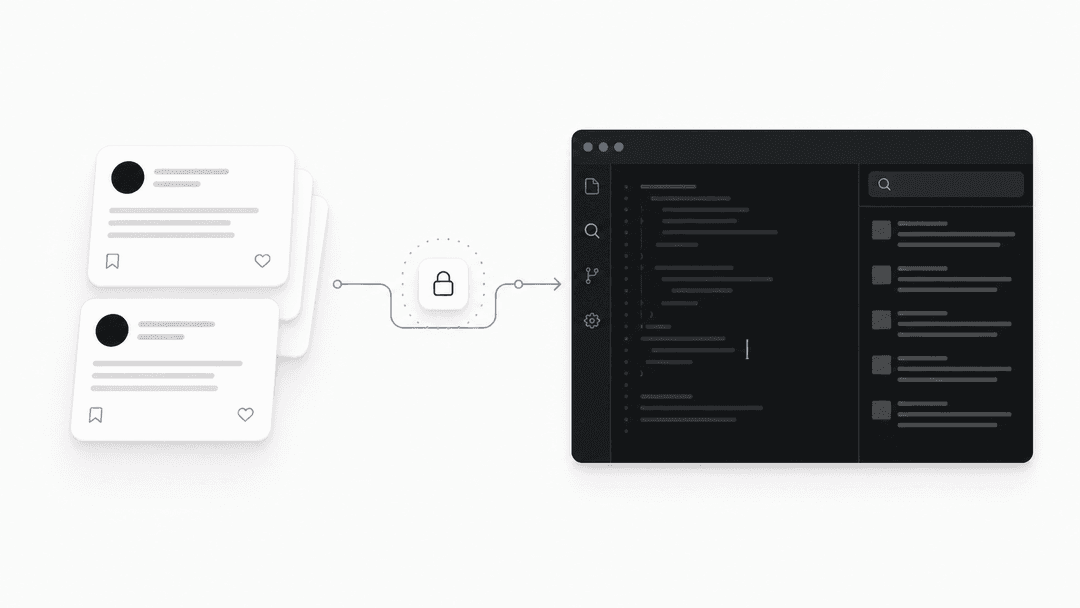
How to Connect X Bookmarks to Cursor
Use socialmemory to make the X posts you liked or bookmarked available in Cursor for search, research, notes, tags, and one explicit URL save.
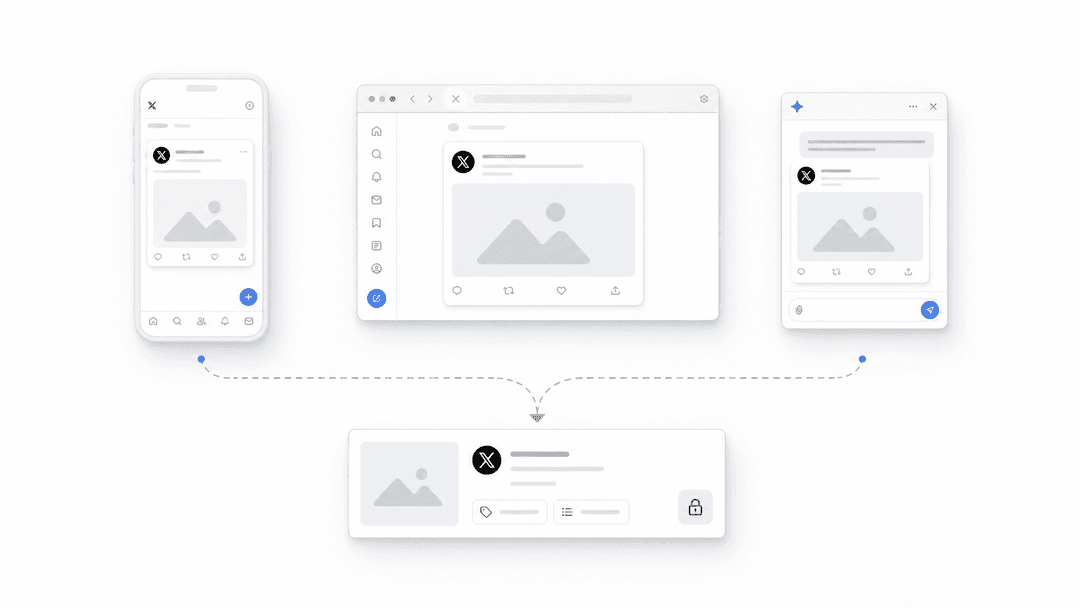
How to Save an X Post From Your Phone to a Private Library
Save one X post or X Article from your phone, desktop, or a connected agent, with an optional note and tags.
Browse by problem
Each cluster links related articles together so X search, Agent Access, second-brain workflows, and comparisons reinforce one another.
X bookmark search
Find old X bookmarks, understand why saved posts disappear in the timeline, and turn the posts you already liked or bookmarked into a searchable archive.
Agent Access and MCP
Use saved X posts as context for Codex, Claude Code, or Cursor through the local socialmemory connection.
Second brain and knowledge reuse
Convert passive X scrolling into reusable notes, project research, weekly digests, and a working second brain for saved ideas.
Social memory vision
Explore the bigger personal-memory layer behind socialmemory while keeping the product focused today on saved X likes and bookmarks.
Comparisons and alternatives
Compare socialmemory against adjacent tools and decide when X-focused agent memory is a better fit than a bookmark organizer.
Every socialmemory guide

How to Search X Bookmarks When X Search Is Not Enough
A practical guide to finding old X bookmarks, what to try inside X first, and how a private searchable library helps when saved posts disappear into the scroll.
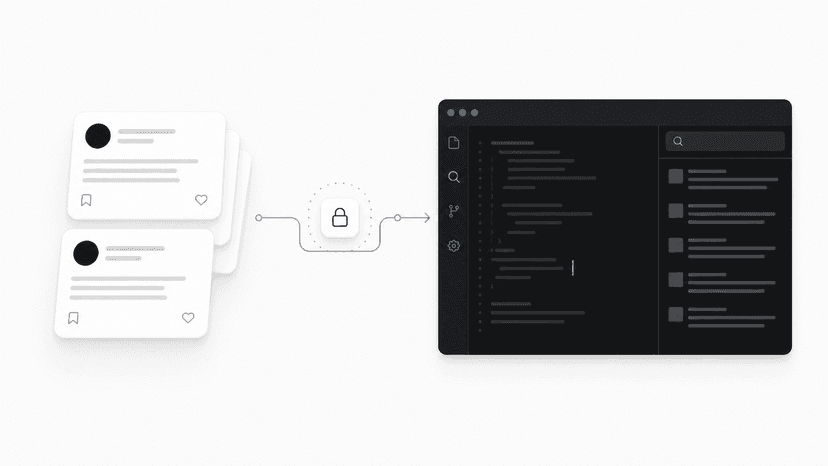
How to Connect X Bookmarks to Cursor
Use socialmemory to make the X posts you liked or bookmarked available in Cursor for search, research, notes, tags, and one explicit URL save.
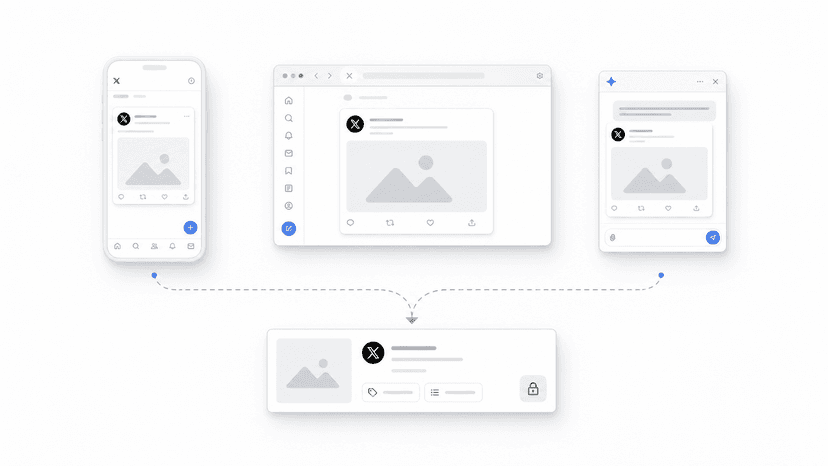
How to Save an X Post From Your Phone to a Private Library
Save one X post or X Article from your phone, desktop, or a connected agent, with an optional note and tags.
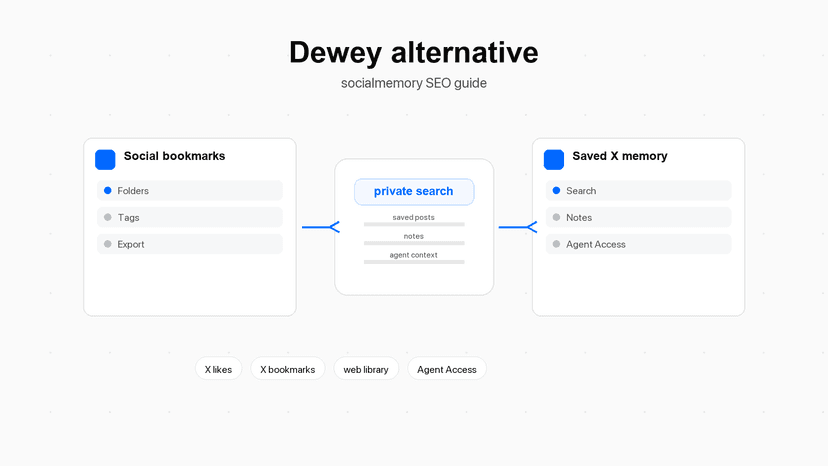
Dewey Alternative: socialmemory vs Dewey for X Bookmark Search and Agent Access
Dewey is strong for organizing and exporting social bookmarks. Socialmemory is built for saved X memory, private search, and optional Agent Access for Codex, Claude Code, and Cursor.
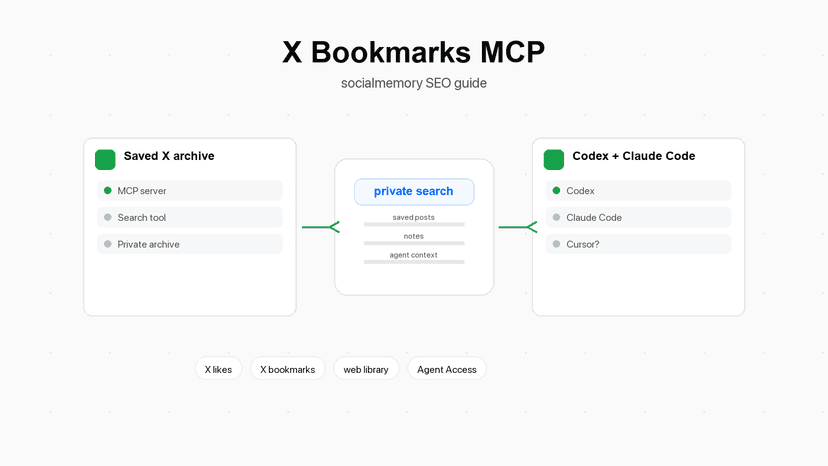
X Bookmarks MCP: Connect Saved Posts to Codex and Claude Code
MCP gives AI tools a standard way to reach external context. For saved X posts, that means bookmarks and likes can become searchable memory for agents instead of staying trapped in the scroll.
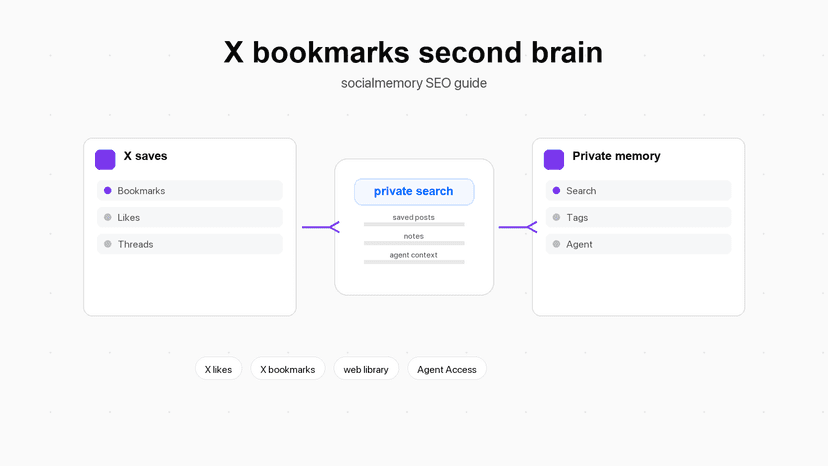
How to Turn X Bookmarks and Likes Into an AI Second Brain
Your X bookmarks and likes already contain ideas, examples, tools, and taste. The missing step is turning them into a private memory layer you can search, organize, and use with AI.
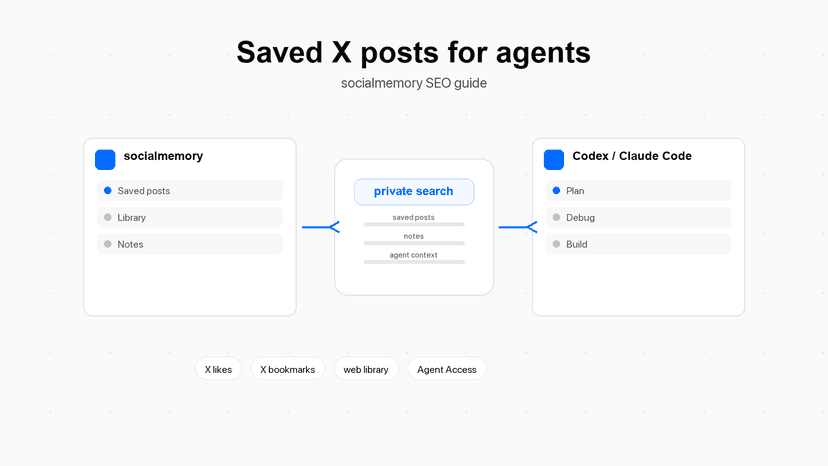
How to Use Saved X Posts With Codex and Claude Code
Turn saved X likes and bookmarks into working context for Codex and Claude Code, with practical prompts for project kickoff, debugging, design, research, writing, launch, and strategy.
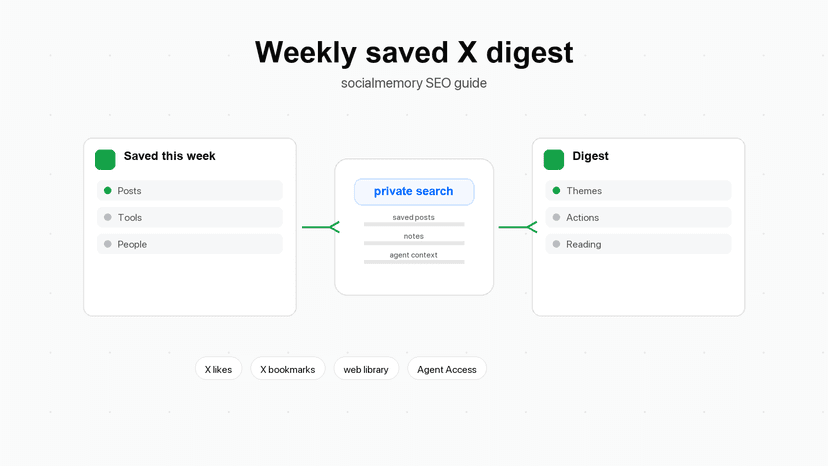
How to Build a Weekly Digest From Your Saved X Posts
A practical weekly review workflow for turning saved X posts into themes, action items, reading lists, tools, and useful next steps.
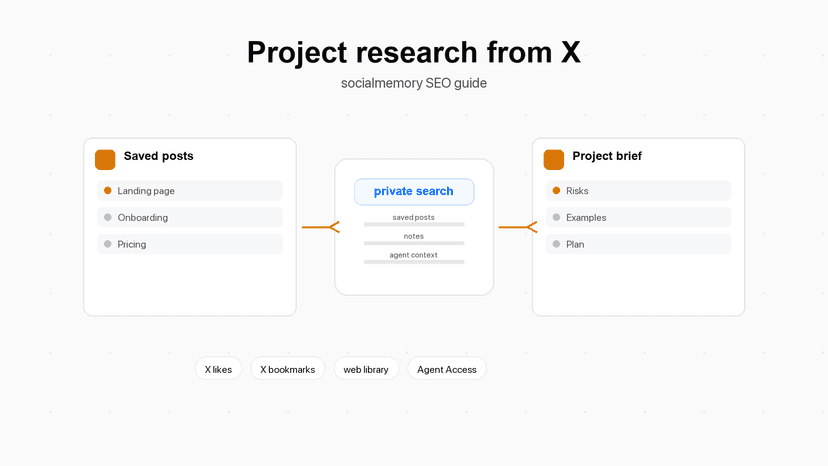
How to Start Every New Project With Research From Your Saved X Posts
A project kickoff workflow for turning saved X likes and bookmarks into research briefs and context for Codex, Claude Code, or Cursor.
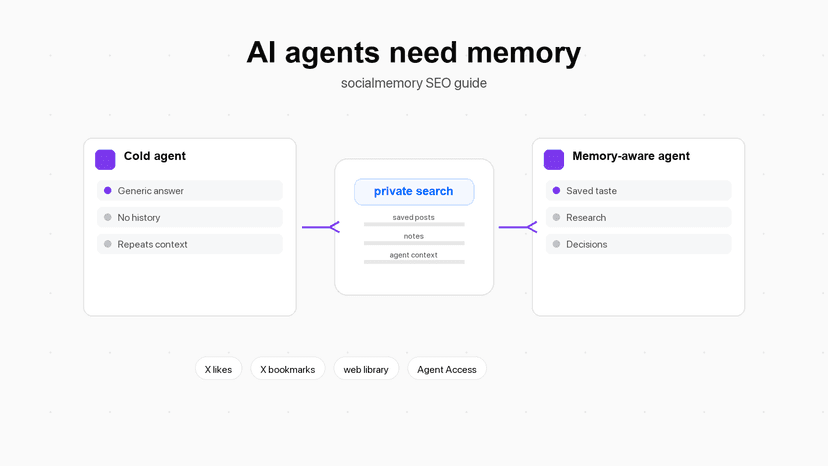
Why AI Agents Need Personal Memory to Do Better Work
AI agents are more useful when they can retrieve durable personal context: saved examples, taste, project rules, prior research, and the X posts you already trusted enough to save.
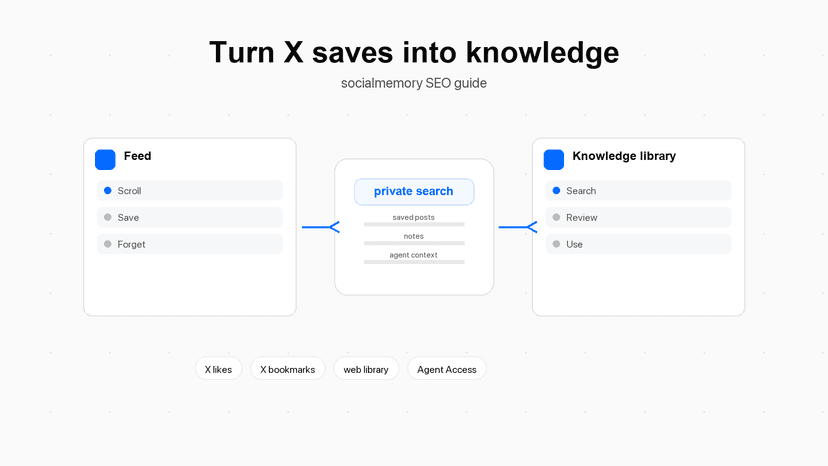
Turn X Bookmarks Into Knowledge: Make Your Feed Work for You
Scrolling on X can be useful discovery. The leverage comes from turning the posts you save into a private library you can search, organize, and use later.
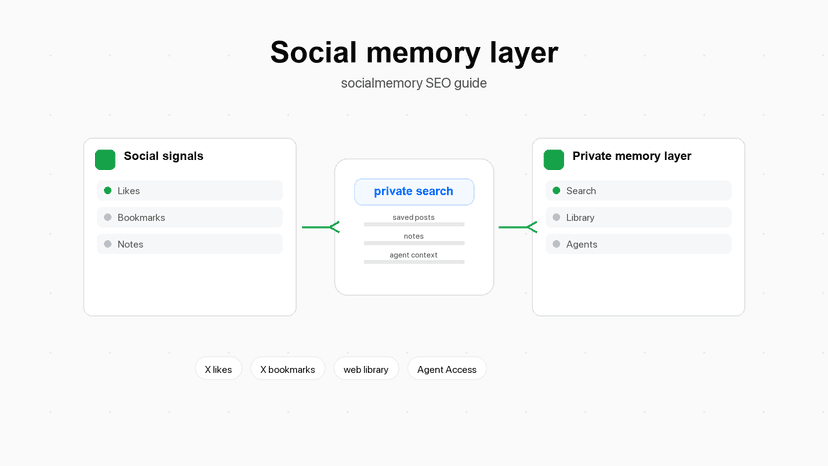
What Is a Social Memory Layer?
A social memory layer makes the social signals you already create, like likes, bookmarks, saved posts, and notes, searchable and useful for you and your AI agents.
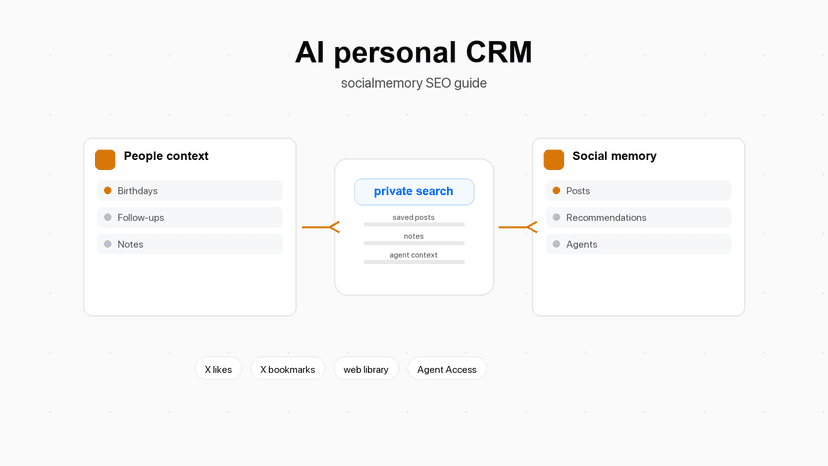
What AI Personal CRM Teaches Us About Social Memory
Personal CRM remembers people. An AI-era memory layer should also remember the posts, recommendations, notes, and context around those relationships.